
May 21 2026
Why Automation-Ready Facilities Are Becoming the UK’s Most Valuable Logistics Assets
MBA Consulting Engineers, part of Contollo Group, says the rapid acceleration of automation across the UK logistics sector is now reshaping not only how warehouses operate, but how they are financed, built and integrated into the wider economy.
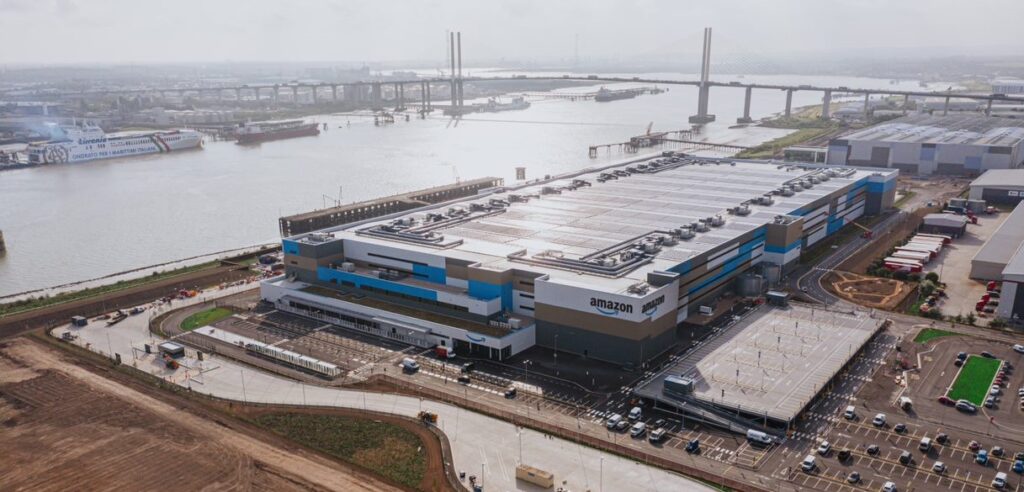
As labour shortages, rising wage levels and persistent productivity pressures collide, automation is becoming a central economic lever, one that is forcing both logistics operators and the construction industry to rethink long held assumptions about cost, capacity and competitiveness.
Whilst there is a higher investment value, the investment cost can be offset through reduced labour costs and improved operational throughputs – a trade‑off that is increasingly defining board level decision making across the sector. Nick Crewe, Managing Director at MBA, says the shift marks a structural turning point. “Automation is no longer a technical upgrade, it’s an economic strategy.
It changes the cost base of logistics, the risk profile of development, and the performance expectations placed on the built environment. The companies that understand this will be the ones that stay competitive in a tightening market.”
MBA notes that automation heavy facilities require a fundamentally different construction approach. Developers and contractors are now being asked to deliver buildings with higher structural performance, greater clear heights, precision engineered slabs and significantly increased power resilience. These specifications are driven not by design ambition but by economic necessity: automated systems only deliver returns when the building can support them without compromise.
For logistics operators, automation is becoming a response to macroeconomic pressures – from the shrinking pool of available labour to the rising cost of fulfilment and the need for 24/7 operational continuity. Automated facilities can deliver faster throughput, more predictable performance and lower long-term operating costs, helping businesses protect margins in a volatile trading environment. As Crewe explains, “Automation is fundamentally about productivity. It allows organisations to scale without being constrained by labour availability or wage inflation.”
MBA also highlights the broader economic implications. Automation ready warehouses attract higher value investment, support more resilient supply chains and enable UK businesses to compete internationally on speed and reliability.
At the same time, the construction sector is being pushed to upskill, adopt new engineering standards and collaborate earlier with automation integrators – changes that are reshaping the industry’s own productivity and capability
Sustainability remains a critical part of the economic equation. MBA argues that automated facilities, when designed holistically, can deliver lower operational carbon, improved energy performance and reduced waste. “Automation and sustainability are not competing priorities,” Crewe says. “With the right modelling, we can balance embodied carbon, operational efficiency and capital cost in a way that strengthens long-term economic value.”
As demand for intelligent logistics infrastructure accelerates, MBA continues to deliver complex, high profile projects for clients such as Ocado, Amazon, Marks & Spencer and Tesco that demonstrate how automation can enhance both operational performance and economic resilience. Crewe believes the shift will define the next decade of growth. “Automation will shape the future of logistics and construction, but the real economic advantage will come from how organisations use it; not just to cut costs, but to rethink what’s possible.”